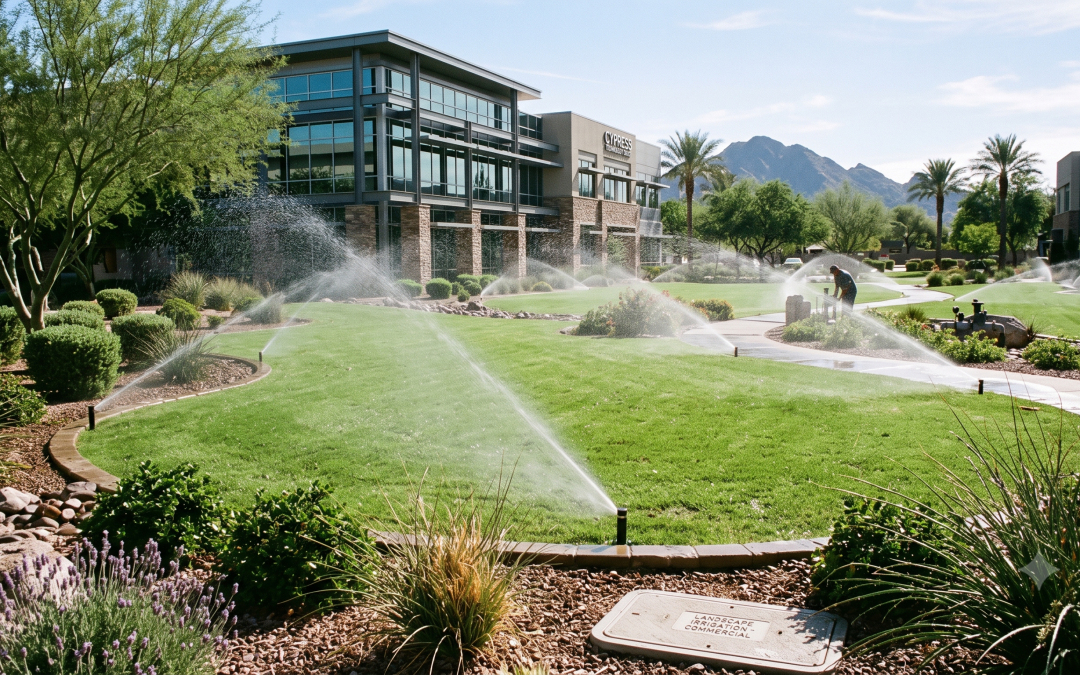
A commercial irrigation system in Northwest Arkansas, whether it comes with a new landscape installation or gets retrofitted, needs three things to work: zoning that separates turf from beds, coverage that actually reaches the whole area with head to head overlap, and a controller that gets adjusted through the season instead of running one schedule all year. Add spring startup, monthly in-season checks, and a proper fall blowout, and a well built system will run for fifteen to twenty years. Skip the service and it will quietly waste water, kill plantings, and fail during the first hard freeze.
Key takeaways
- Turf and beds on the same zone means one of them is always being watered wrong.
- Springdale is USDA Zone 7a. Freezes here are real, and winterization is not optional.
- Most irrigation waste on commercial sites is invisible: a tilted head, a stuck valve, a leak under turf.
- Monthly wet checks during the growing season are the cheapest line item on the whole property.
What makes commercial irrigation different
Residential irrigation is a small system with a homeowner walking past it every day. Commercial irrigation is a large system on a property where nobody is looking closely, running at 2 a.m., across acres that may include turf, shrub beds, parking islands, retention areas, and seasonal color.
That difference matters. On a house, a broken head shows up as a wet spot somebody notices. On a twelve acre campus, a broken head at the back of building three runs for six weeks before anybody mentions it, and by then you have a washed out bed, a soggy sidewalk, and a water bill nobody can explain. This is exactly why irrigation checks belong in your grounds maintenance contract rather than in nobody’s job description.
Commercial systems also carry more regulatory weight. Backflow prevention is required to protect the potable supply, and testing requirements apply. That is a compliance item, not a preference.
Designing a system that works here
Separate your zones properly
The most common design failure is mixing turf spray heads and shrub bed irrigation on the same valve. Turf wants shorter, more frequent cycles. Beds want deeper, less frequent watering. Put them together and you either drought stress the turf or drown the shrubs.
Zones should also be separated by exposure. A south facing bed against a brick wall dries out far faster than a shaded bed on the north side. Same property, completely different water demand.
Match precipitation rates within a zone
Every head on a zone should apply water at roughly the same rate. Mixing rotors and spray heads on one valve guarantees that part of the zone is soaked while another part is dry, and no amount of controller adjustment fixes it.
Design for head-to-head coverage
Sprinkler heads should throw far enough that the spray from one reaches the next. Anything less leaves dry rings that show up as brown crescents in August. This is a design decision that is expensive to correct later.
Use drip in beds
Low-volume drip or inline emitter tubing in shrub and perennial beds uses noticeably less water than overhead spray, and it keeps foliage dry. In Northwest Arkansas humidity, dry foliage means less fungal disease pressure.
Sleeve before you pave
If a system ever crosses a drive lane, sidewalk, or parking area, put the sleeve in before the concrete or asphalt goes down. Boring under finished pavement later is one of the most avoidable costs in commercial site work.
Install a smart controller and a rain sensor
A controller with seasonal adjustment, plus a rain sensor or a weather-based schedule, prevents the classic Northwest Arkansas situation of sprinklers running during a thunderstorm. It is a small hardware cost against a recurring water bill.
Working with our soil
Red clay over limestone and sandstone is the norm across much of Washington and Benton County. It absorbs water slowly and holds it for a long time. The University of Arkansas Cooperative Extension Service offers soil testing that is worth doing before you set a watering schedule.
The practical consequence is that a long single run time causes runoff. Water applies faster than the clay can take it in, and the excess sheets across the surface into the parking lot. The fix is cycle and soak: run a zone for a shorter period, pause, then run again. Most modern controllers do this automatically once configured.
On sloped sites, which is much of the Ozarks, cycle and soak matters even more. Runoff on a grade takes mulch and soil with it.
The service calendar
Spring startup (March to April). Charge the system slowly to avoid water hammer. Walk every zone. Check for winter damage, broken heads, and leaks. Reset the controller schedule for the season.
Monthly wet checks (May through September). A technician runs each zone manually and watches it. This is how you catch a head knocked sideways by a mower, a clogged nozzle, a sunken head that is spraying into the turf, or a valve that is not fully closing. Twenty minutes of looking prevents most irrigation related plant loss.
Mid-season schedule adjustments. July demands are not October demands. A controller that never changes is either wasting water or starving plants, depending on the month.
Fall winterization (late October to November). Shut off the supply, then blow the lines out with compressed air, zone by zone. Water left in a lateral line freezes, expands, and cracks pipe and fittings. In Zone 7a with lows that can reach 0 to 5 degrees, this happens most winters.
Winterization also means draining and protecting the backflow assembly, which is typically above ground and the most freeze vulnerable component on the entire system.
The failures that cost the most
A stuck valve. A diaphragm that will not seat means a zone runs continuously. On a commercial site this can go unnoticed for weeks.
A mainline leak. The mainline is pressurized all the time, so a leak there runs every hour of every day. Look for unexplained wet areas, soft turf, or a water bill that jumped without a reason.
Heads buried by mulch or grown over by shrubs. Every mulch application and every season of shrub growth changes the spray pattern. This is why checks matter more than installation quality after year three.
A controller nobody owns. When staff turns over and nobody knows the password or the zone map, the system runs on whatever schedule it had. Keep a labeled zone map in the controller enclosure.
No backflow testing. Beyond the compliance issue, a failed backflow assembly can drop system pressure and reduce coverage across the property.
What this costs
Commercial irrigation installation is priced per zone and per point of connection, and varies with property size, water source, pipe runs, and whether trenching or boring is needed. Service is more predictable. Spring startup, monthly checks through the season, and fall winterization together typically represent a small fraction of what a property spends on grounds maintenance, and they protect a much larger investment in plant material.
Put differently: if a property has $80,000 of installed landscape, spending a modest amount annually to keep the irrigation honest is not really a debatable line item.
Frequently asked questions
When should I winterize my irrigation system in Northwest Arkansas? Late October through November, before the first sustained hard freeze. Springdale is USDA Zone 7a, where winter lows can reach 0 to 5 degrees, which is more than enough to crack pipe and destroy a backflow assembly.
How often should a commercial irrigation system be inspected? Monthly during the growing season, roughly May through September, plus a full spring startup and a fall winterization. Sites with heavy mowing traffic or vehicle exposure benefit from more frequent checks.
Why is part of my commercial lawn brown even though the sprinklers run? Usually a coverage problem rather than a run time problem. Common causes are heads that no longer overlap, a tilted or sunken head, mixed nozzle types on one zone, or clay runoff carrying water away before it soaks in.
How long does a commercial irrigation system last? A well-designed and maintained system commonly runs fifteen to twenty years or more. Heads and nozzles are consumables and get replaced along the way. Mainlines, valves, and controllers last much longer if they are winterized properly.
Can drought-tolerant or native plants skip irrigation? Not during establishment. Arkansas natives like little bluestem, purple coneflower, and American beautyberry need consistent water for the first season or two. After that they need far less, which is exactly why they are worth using on commercial sites.
Related reading
Talk to The Grey Barn
The Grey Barn designs, installs, and services irrigation systems as part of our commercial installation, commercial maintenance, and residential installation work across Northwest Arkansas.
Call 479.521.8162 or request a quote and we will assess what you have.